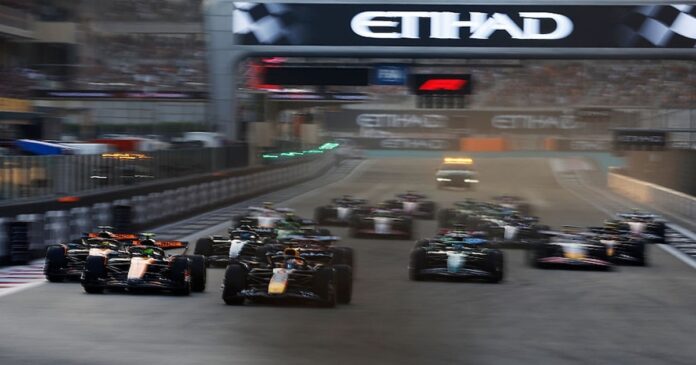
I know you’re all already thinking about 2026 and what the new regulations have in store, but the holidays are about tradition (and, you know, a bit of planning), so it’s the point in the year when I like to be judgmental about all of the teams and reflect on how their respective seasons stack up. Picking out both good and bad aspects for each team, the scoring is obviously never contentious…
We’ve arranged the teams in alphabetical order, with today’s installment taking us from Alpine through to Mercedes. Look for part two tomorrow.
ALPINE
Poles: 0
Wins: 0
Constructors’ championship position: 10th (22 points)
The good: Pierre Gasly. That’s pretty much it based on this year. It’s quite remarkable that he managed to secure a top six finish in the 2025 Alpine, and the fact that he is locked in for the long-term is a big plus for the team. Perhaps clutching at straws a little, but stability in the driver line-up over the winter should help, with Franco Colapinto finally getting a pre-season as a race driver to prepare for 2026.
As sad as it was to see the Renault power unit program close down, there is also optimism in the form of a Mercedes supply deal next year that should provide a strong step forward in competitiveness, particularly as Enstone has regularly produced a good chassis in previous years. A new era provides a chance of a step forward, even if the team still appears to lack secure foundations.
The bad: Where to start? It was not a fun time to be part of Alpine, with the shock departure of team principal Ollie Oakes following the Miami Grand Prix, and an uncompetitive car that did not receive a huge amount in the way of development investment.
Jack Doohan was predictably dropped for Colapinto after just six races, giving him no time to learn the ropes as a rookie in what was clearly a difficult car and unsettled team. That environment also didn’t give Colapinto the easiest entry point mid-season, and the two that shared the second seat alongside Gasly were the only drivers to fail to score all year.
RATING: 3/10
ASTON MARTIN
Poles: 0
Wins: 0
Constructors’ championship position: 7th (89 points)
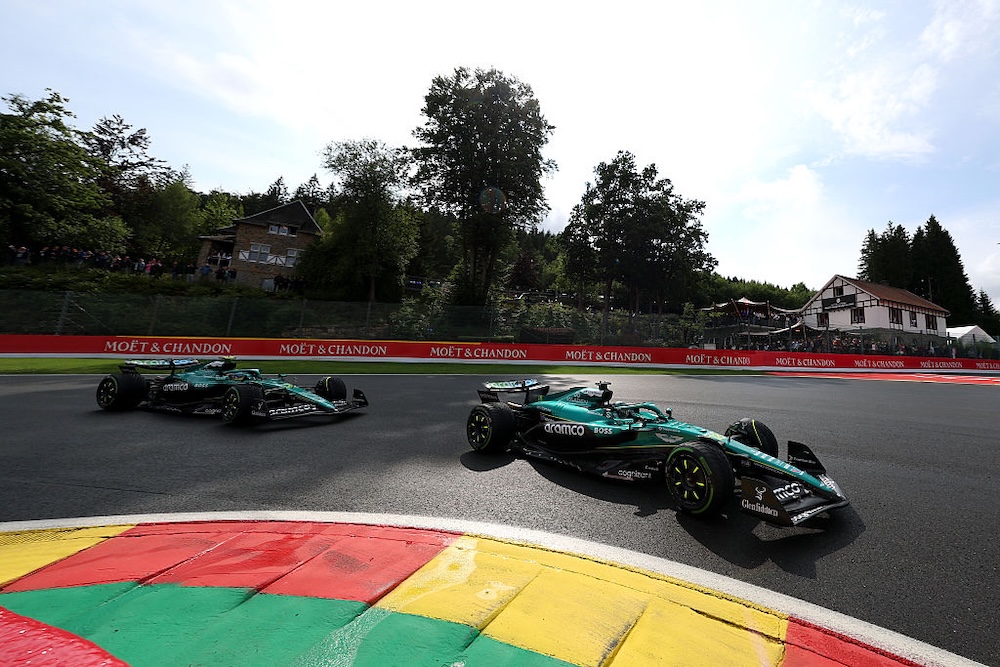
The good: Last year at this time I wrote: “The season’s over, and Adrian Newey is arriving in 2025.” So now we should make it: “The season’s over, and Adrian Newey has arrived.” Plus, Fernando Alonso is still very capable of securing results the car barely appears capable of, with a fifth place in Hungary and a sixth to round out the year in Abu Dhabi the standout scores.
Lance Stroll also pulled in some solid results in the first half of the year, and despite a huge amount of focus clearly being on 2026, Aston Martin remained a regular feature in an extremely competitive midfield.
The bad: I also said this time last year you’d be surprised to see Aston Martin deliver a car good enough for the top five, and so it proved, although some of that can be attributed to the overall more competitive field. Its haul of 89 points was just five shy of its total from 2024 that secured fifth place, but there was certainly no progress from a competitive point of view.
Despite such a long run at the 2026 regulations, the lack of stability within the team is a worry, and Newey does not appear to be the right fit as team principal despite his obvious genius. Andy Cowell’s repositioning late in the year suggests the right pieces are not yet in the right places, and that doesn’t bode well for taking advantage of the start of the new era – specifically capitalizing on a good car if Newey and co deliver it.
RATING: 5/10
Guido De Bortoli/Getty Images
FERRARI
Poles: 1
Wins: 0
Constructors’ championship position: 4th (398 points)
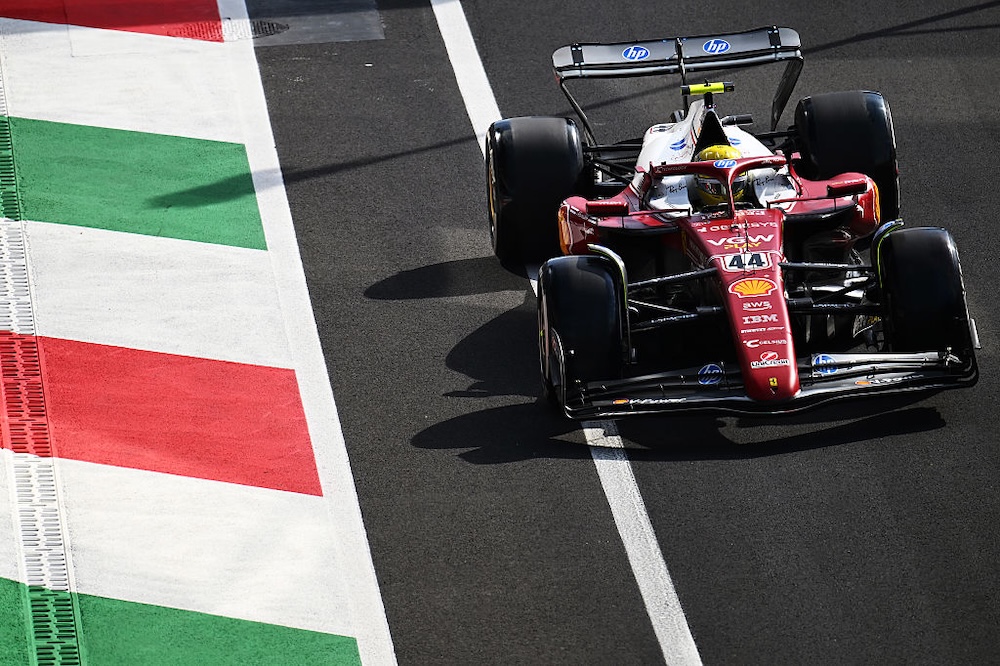
The good: Quite tough to pick something to this end this year, which I’ll admit I didn’t see coming at the end of 2024. Lewis Hamilton did win the first Sprint of the year – which ultimately turned out to be one of the team’s major highlights of the season – and Charles Leclerc put together another strong campaign with seven podiums, coming very close to repeating his emotional Monaco victory from 2024. Mid-season, Hamilton appeared to be finding his feet, too, with some strong qualifying performances.
There was also a point when the grid formed in Mexico City where Ferrari appeared to be heading for another runner-up finish in the constructors’ championship, with both cars in the top three and having finished third and fourth in Austin. Leclerc held on for second place in the race, but that was as good as it got.
The bad: It’s a pretty long list, but the car has to be the main area of focus. Ferrari has shown in the past that when it has a good car it can be a really strong team and execute well, but that’s a rare commodity out of Maranello.
From where it ended last year, Ferrari should have been a big threat to McLaren. Instead, it got a new car wrong, had to resolve issues with it early on (highlighted by the double-DSQ in China) and was out of contention before the season was a quarter old. The focus shifted to 2026, and that took its toll by the end of the season, particularly as Hamilton’s form dropped away and Ferrari limped home fourth overall.
Of the final eight rounds, Hamilton’s fourth place in Austin was an anomaly in terms of results, never finishing higher than eighth other than that. It can still work out, but there’s a lot of hard work ahead for both Ferrari and Hamilton.
RATING: 4/10
Chris Graythen/Getty Images
HAAS
Poles: 0
Wins: 0
Constructors’ championship position: 8th (79 points)
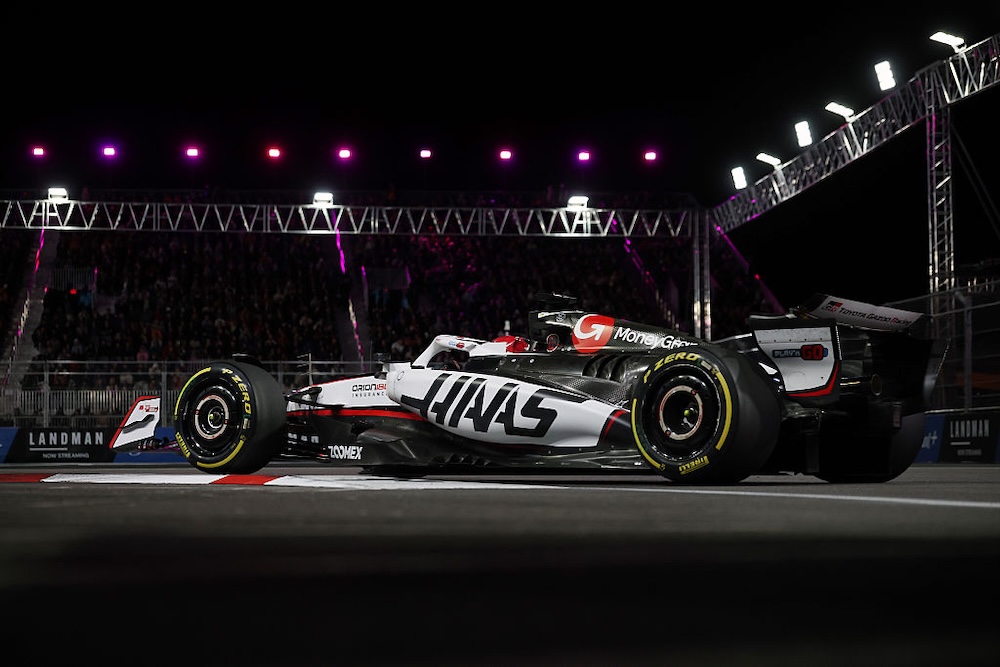
The good: Haas turned around a problematic start to the season – a floor weakness that meant it had to run the car extremely high in Australia and was miles off the pace – with incredible speed. Next time out in China, the car could be run normally and Esteban Ocon was fifth and Ollie Bearman eighth, kicking off a run of three straight point-scoring weekends. An update to rectify the problem came in Japan, just three weeks after the Melbourne struggles.
On five occasions Haas managed to score points with both cars, suggesting good execution across both sides of the garage on those weekends, and there was the high point of Bearman’s fourth place in Mexico City that showed both what the team can do and further highlighted the rookie’s potential. Despite slipping to seventh in the standings, it felt like further progress.
The bad: As good as the reaction was, the floor issue at the start of the year took valuable focus and was a glaring problem to resolve. Year-on-year, the aforementioned progress was still limited, as there were some standout off-weekends – Barcelona an obvious example – and some big missed opportunities. Belgium and Azerbaijan should have seen strong points scored but Haas didn’t put it all together.
Ocon’s form in particular was very up-and-down as he struggled with understeer, and it feels like the 13 points that separated Haas from Racing Bulls in six in the championship were out there for the team to take at different moments. It didn’t maximize everything, but right now it feels like Haas is operating close to its ceiling, and needs further investment to realistically target higher in future.
RATING: 7/10
.jpg)
McLAREN
Poles: 13
Wins: 14
Constructors’ championship position: 1st (833 points)
The good: The upward trend continued despite the final year of regulations providing a significant opportunity for convergence, with McLaren’s technical team doing an excellent job to pull clear of the rest of the field at the start of the season.
Lando Norris hardened into a true champion in the final third of the season, while Oscar Piastri also made a major step forward to look every bit the full package for most of the year. And despite the risks of letting both fight for the title, the end result was a championship double and plenty of excitement until the final round.
The bad: McLaren so nearly let a drivers’ championship slip through its grasp through its own errors. As much as neutrals will have enjoyed the battle going down to the wire, the disqualification in Las Vegas only affected McLaren, and then the huge strategic error in Qatar handed Max Verstappen another victory when he needed no invitation.
Got the job done in the end, but it was a worrying first two races of the triple header that put massive pressure on the final round that really shouldn’t have been needed. The infamous Papaya Rules were admirable but also far from perfect, and simplifying them might well be required in order to successfully stick with the approach next year.
RATING: 9/10

, so it’s the point in the year when I like to be judgmental about all of the teams and reflect on...)