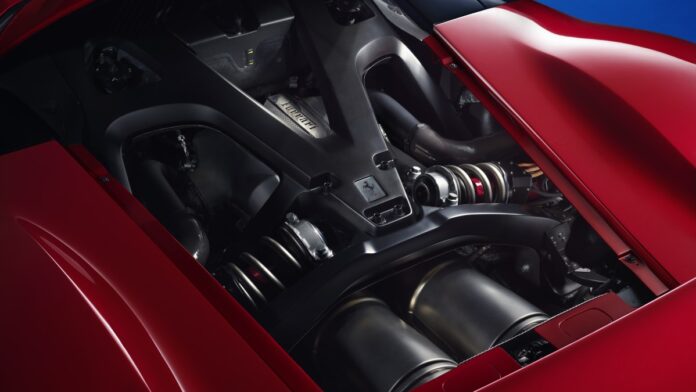
The V6 is better in this case
The Ferrari F80 is one of the brand’s most prolific offerings in recent memory, as the limited-production supercar is meant to represent the pinnacle of the Prancing Horse’s engineering teams. Unveiled last October, just 799 units of the F80 are being built to commemorate the brand’s 80th birthday.
But despite being pegged as the brand’s ultimate supercar, the engineers at Maranello have distinctly omitted one Ferrari signature feature that has raised some enthusiasts’ eyebrows for a car of this caliber. Notably, the F80 omits a high-output 12-cylinder engine, a powertrain that was found in its predecessor, the LaFerrari.
For some devout followers of the Scuderia, this is a mortal automotive sin that requires penance and explanation; however, the folks at Ferrari noted that this decision was not made in vain and had a purpose.
Ferrari: We put the V6 in the Le Mans car, and we won three times
During the latest in a series of talks that the Museo Enzo Ferrari in Modena dubbed “Supercar Talks” on November 19, a panel that included F80 development team members Paolo Valenti, Carlo Palazzani, Matteo Lanzavecchia, and Senior Product Marketing Manager Matteo Turconi discussed the F80 and its development at length.
During their presentation, Turconi revealed that Ferrari gave a lot of consideration to its choice of powertrain, noting that they had the option to install the V12, but felt that their race-bred turbocharged V6 would be a better choice because of what it was capable of.
“When speaking of the powertrain, we asked ourselves: Should the new Supercar feature the most iconic engine in Ferrari’s history? Naturally, the V12, or take the best of racing for sheer performance?” he noted. “Here, too, the question ultimately had a simple answer, even if it didn’t seem like it. We chose the second option. We took the best of racing, which today means a turbocharged V6 combined with a hybrid system.’
Ferrari
The 3-liter, twin turbo V6 engine, the highlight of the F80’s hybrid powertrain, is derived from the engine in the Ferrari 499P, the three-time 24 Hours of Le Mans winner. According to Ferrari, the engine without its electric accoutrements delivers 296 hp per liter on its own, the highest ever achieved in a production car, for a total of 888 hp.
With these numbers and claims backing him up, Turconi made a bold statement that could send the strictest Ferrari purists into terminal shock and the “no replacement for displacement” crowd. “Without a doubt, today, the V6 is superior to a V12,” he declared to the room.
Ferrari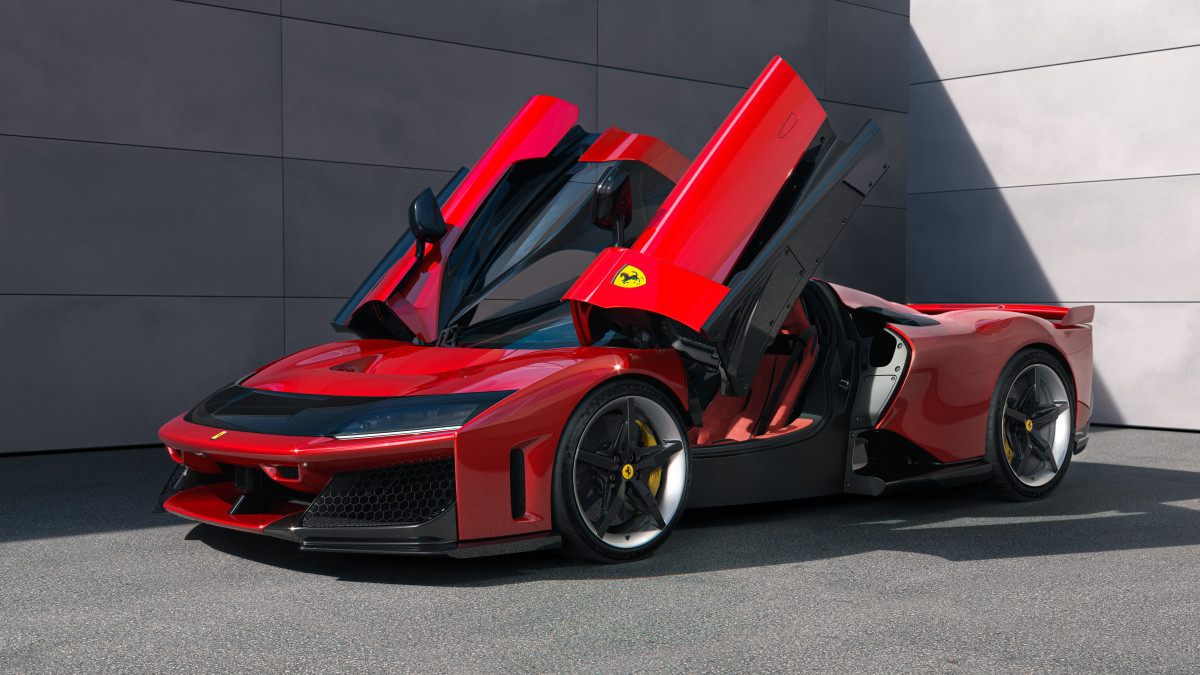
In addition to the output, the Ferrari team noted that there were additional benefits for choosing the twin-turbo V6 over the V12. Notably, Ferrari vehicle engineer Matteo Lanzavecchia noted that the F80 was developed alongside the 499P Le Mans car. Although the two cars had different applications, using a V6 allowed Ferrari to achieve not just significant weight savings, but also more room to enhance the aerodynamics for improved handling.
“Using a V6, for example, having six cylinders instead of 12 […] allows us to generate the same, or even higher, horsepower than a V12 in a tighter space, enabling us to tilt the engine-transmission assembly and open up the rear section to better exploit the extractor and underbody, generating much more vertical downforce,” he said.
Final thoughts
For all that it’s worth, all of the 799 allocated units of the Ferrari F80 are entirely sold out, but this highly technical presentation about the car given by the panel at the Enzo Ferrari Museum is a masterclass in high-performance vehicle engineering. If you have an hour or so to yourself over this Thanksgiving weekend, the panel explains in great detail how every decision was made with a pure intent to showcase its technical capabilities, rather than uphold its heritage.

