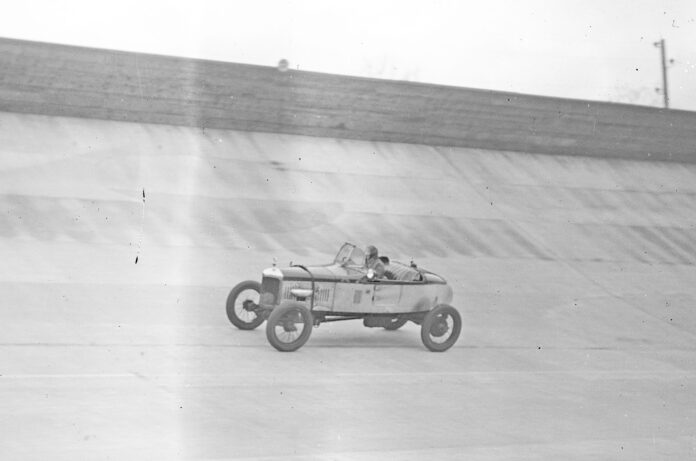
A pilot, power boater and supremely talented driver, we’re glad Mildred Petre is being remembered
Bentley recently revealed its “most driver-focused” car so far, a 675bhp V8-powered, rear-wheel-drive, carbonfibre-covered coupé known internally as… Mildred.
No, the codename was not inspired by the long-suffering wife in George & Mildred but a swashbuckling hero of road and track – and sky and sea.
She was born as Mildred Petre in 1895 but found fame as Mrs Victor Bruce following her 1926 marriage to the test driver of British sports car maker AC, a son of Baron Aberdare. Having learned to ride motorbikes and drive cars in her privileged childhood, she immediately joined in with her husband’s motorsport escapades – a veritable stack of court convictions proving her aptitude for high-speed driving.
With her husband beside her, Bruce entered the Monte Carlo Rally in January 1927, aiming to prove the AC Six tourer’s worth by starting all the way up at John O’Groats – and would finish sixth, earning the Coupe des Dames.
As if this wasn’t already a mad idea for a honeymoon, she then pressed on into Italy, over the sea to Tunisia, Algeria and Morocco, then back north through Spain, Portugal and France to the banked track at Montlhéry – where she would average 50mph over 1000 miles.
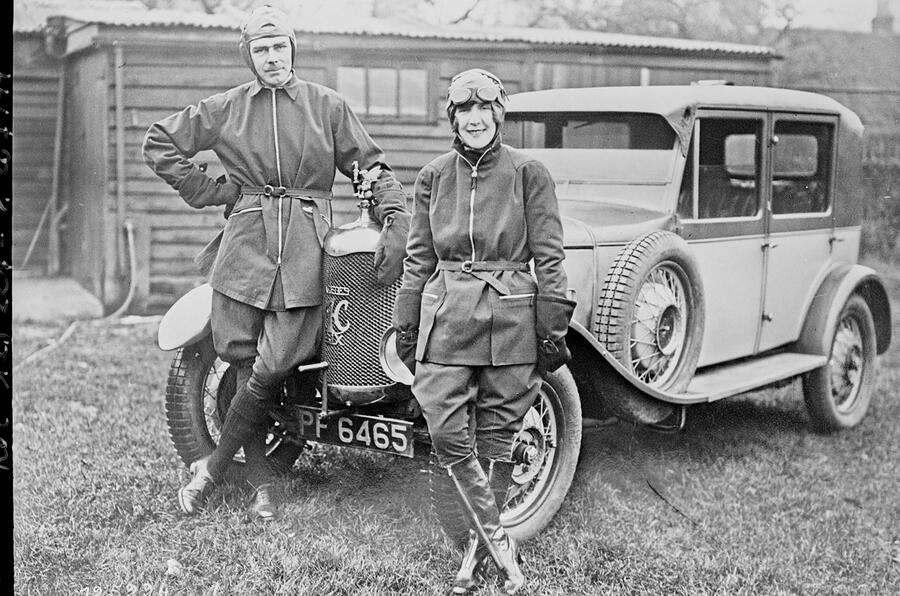
AC ads boasted that this was “a feat of endurance at which many of the so-called ‘sterner sex’ might hesitate”, and Autocar agreed that it was “the greatest drive by a woman” yet. What next? The Arctic Circle, obviously.
Bruce drove the AC up through Sweden until the road ran out and then “by dint of Herculean labour” another three kilometres until it became totally stuck in a swamp by the Arctic shore. “It was impossible to proceed,” she wrote, “and we had achieved our objective: to penetrate further north than any car had ever been before.”
Little wonder that she promptly became Autocar’s regular writer on women’s motoring matters. Bruce rounded off her annus mirabilis back at Montlhéry in the second week of December, as she and her husband lapped the AC Six – treated to a few choice bodywork modifications – for 15,000 miles straight, breaking the record by an astonishing 48 hours 26 minutes.
“British pluck and a British car rouse the enthusiasm of the French,” ran Autocar’s headline, and indeed the Bruces had battled through “rain, heavy fog, cold winds, sleet and slow” – and at one point Victor actually flipped the car, fortunately without serious harm.
Enjoy full access to the complete Autocar archive at the magazineshop.com
“There is a keen rivalry between the two, Mrs Bruce claiming that she ought to be at the wheel as long as her husband, and, it may be mentioned, generally succeeds in getting her own way,” we noted. Over 220 hours 32 minutes, they had averaged 68mph. Throughout 1928, Bruce raced at Surrey’s Brooklands circuit and rallied in the Coupe des Alpes, both for AC.
Then in 1929 she set yet another record at Montlhéry, this time in a 4.5-litre Bentley (the big beast that won fame at Le Mans), single-handedly covering 2150 miles in 24 hours – an average of 89mph.
“The principal things which I feared might be difficult to overcome were not so much the physical strain as the monotony and sleepiness, but so far as the latter was concerned I suffered only once, and then slightly; and as to the former, well, there was literally no time to become ‘fed up’ with the continual circling,” she reported.
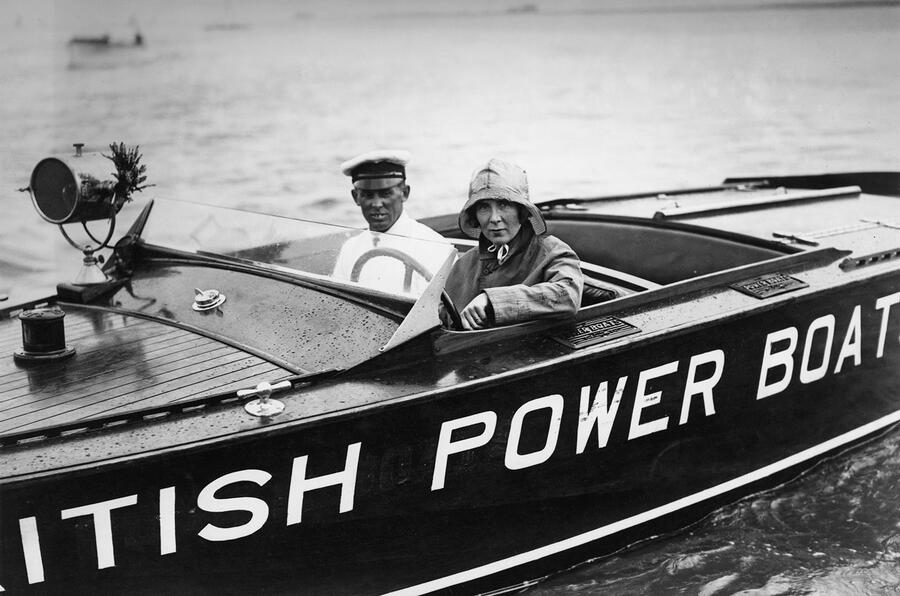
Thereafter Bruce doubled down on her ‘woman of steel’ pursuits. In summer 1928, she had bought a newfangled motor speedboat from American firm Elco, competing in trophy races held on a London lake, then broke the record for a double Channel crossing, taking 1 hour 47 minutes. Still this wasn’t enough: next was a 24-hour record-breaking run, as she covered 694 nautical miles on a circuit in the Solent.
Then in 1930, Bruce earned her flying licence, bought a Blackburn biplane – and promptly set off on a round-the-world flight. Stupefying. She reached Tokyo from London in 25 days, despite a crash landing in Persia and a bout of jungle malaria.
Autocar columnist ‘Vagrant’ went “hero worshipping” upon Bruce’s return, noting reverently: “She was looking very fit and happy, though the Society for the Prevention of Cruelty to Plucky Little Women missed a great chance by not taking action against the culprit who made her wear about half a hundredweight of medals and things which had come her way in outlandish parts of the world. However, she clanked about bravely, smiling at all.”
You’ll never think of the name Mildred in the same way again.

